
Keywords
Graphene
Thermal
Conductivity
Transversal competences
Peer-to-peer transfer
- Abstract 3
- PDF (Español) 0
- HTML (Español) 0
Abstract
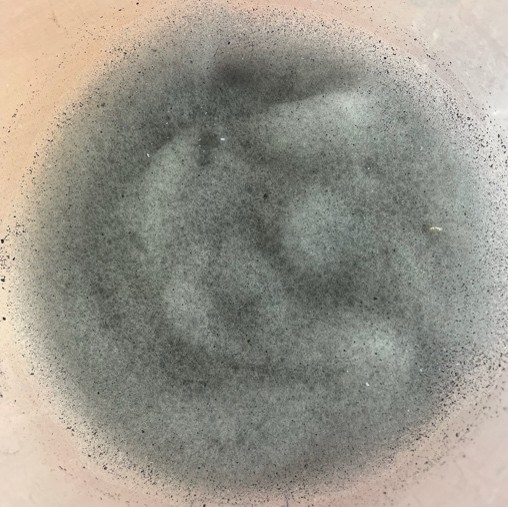
This work presents the ABI+D+i methodology (Research-Based Learning with Development and innovation) applied to a real case: an experimental inquiry project born in the school laboratory and extended to university level, centred on the production of graphene through a low-cost liquid-phase physical exfoliation method and its placement onto metallic substrates by flotation, validated through characterisation (SEM, Raman) and thermal-conductivity tests (+130% in graphene-coated aluminium). The case also includes a dedicated nomenclature (graphenization and graphenation), with morphological grounding in both Spanish and English. The project's peer-to-peer transfer to a network of secondary schools confirms the scalability of the methodology and its capacity to awaken scientific vocations
References
J. Tejada Fernández, C. Ruiz Bueno, Educación XX1 2016, 19, 17-38, https://doi.org/10.5944/educxx1.12175.
E. Fitzer, K. Köchling, H. P. Boehm, H. Marsh, Pure Appl. Chem. 1995, 67, 473-506, http://dx.doi.org/10.1351/pac199567030473.
M. Sang, J. Shin, K. Kim, K. J. Yu, Nanomaterials 2019, 9, 374, https://doi.org/10.3390/nano9030374.
K. R. Paton, E. Varrla, C. Backes, R. J. Smith, U. Khan, A. O’Neill, C. Boland, M. Lotya, O. M. Istrate, P. King, T. Higgins, S. Barwich, P. May, P. Puczkarski, I. Ahmed, M. Moebius, H. Pettersson, E. Long, J. Coelho, S. E. O’Brien, E. K. McGuire, B. Mendoza Sanchez, G. S. Duesberg, N. McEvoy, T. J. Pennycook, C. Downing, A. Crossley, V. Nicolosi, J. N. Coleman, Nat. Mater. 2014, 13, 624-630. https://doi.org/10.1038/nmat3944.
A. M. Naz Lucena, “Aprendizaje Basado en la Investigación (ABI), IES Martín Rivero (Ronda)”, disponible en https://www.youtube.com/watch?v=_-lYs5-lx-Q, 2022 (consultado: 23/10/2026).
A. M. Naz Lucena, en Experiencias innovadoras para el aprendizaje: construyendo el conocimiento del futuro. Libro de actas del IV Congreso Internacional Innovación Docente, Educación y Transferencia del Conocimiento (CIINECO), (Eds.: C. López Marcos, R. Pinilla Gómez), Egregius Ediciones, Sevilla, 2025, pp. 736-737.
A. M. Naz Lucena, M. M. Ariza Montes, C. Clavijo, en Apostando por las vocaciones científicas desde la educación secundaria: oportunidades mediante investigaciones con el programa SCIENCE-IES (PIIISA), (Eds.: T. Lupión Cobos, F. J. Pérez Cáceres) UMA Editorial, Málaga, 2018, pp.59-80.
D. Guerrero Moreno, en Actas del 33º Congreso de Jovenes CEULAJ, Mollina (Málaga) 30 nov., 1 y 2 dic. de 2021, (Eds.: M. F. Martín Nieto, A. Ibarra Sierra), Instituto de la Juventud (INJUVE), Madrid, 2021, pp. 366-379.
D. Guerrero Moreno, A. M. Naz Lucena, en Ciencia en Acción, Edición XXIV: Libro de Actas, Viladecans (Barcelona), 2023, p. 93, disponible en: https://web.cienciaenaccion.org/sites/default/files/2025-03/Libro%20de%20Actas_CEA_2023.docx.pdf (consultado: 23/10/2026).
D. Guerrero Moreno, Trabajo Fin de Grado, Università degli Studi di Perugia, 2025.
C. A. Gottfurcht, Tesis doctoral, Northwestern University, 2007.
L. Bauer, English Word-Formation, Cambridge University Press, Cambridge, 1983.
A. Mäsiarová, Tesis doctoral, Masaryk University, Faculty of Education, 2015.
Real Academia Española, “8.10 Verbos derivados en -izar, -ificar y sus variantes. Otros afijos verbales”, Nueva gramática de la lengua española, 2019, disponible en: https://www.rae.es/gramática/morfología/verbos-derivados (consultado: 20/10/2026).
Real Academia Española, “8.7 (verbos derivados en -ar y sus variantes: formas parasintéticas” Nueva gramática de la lengua española, 2019, disponible en: https://www.rae.es/gramática/morfología/verbos-derivados-en-ar-y-sus-variantes-ii-formas-parasintéticas-los-tipos-aaar-y-anar (consultado: 23/10/2026).

This work is licensed under a Creative Commons Attribution-NonCommercial-ShareAlike 4.0 International License.
Copyright (c) 2026 Anales de Química de la RSEQ